2018年6月17日星期日

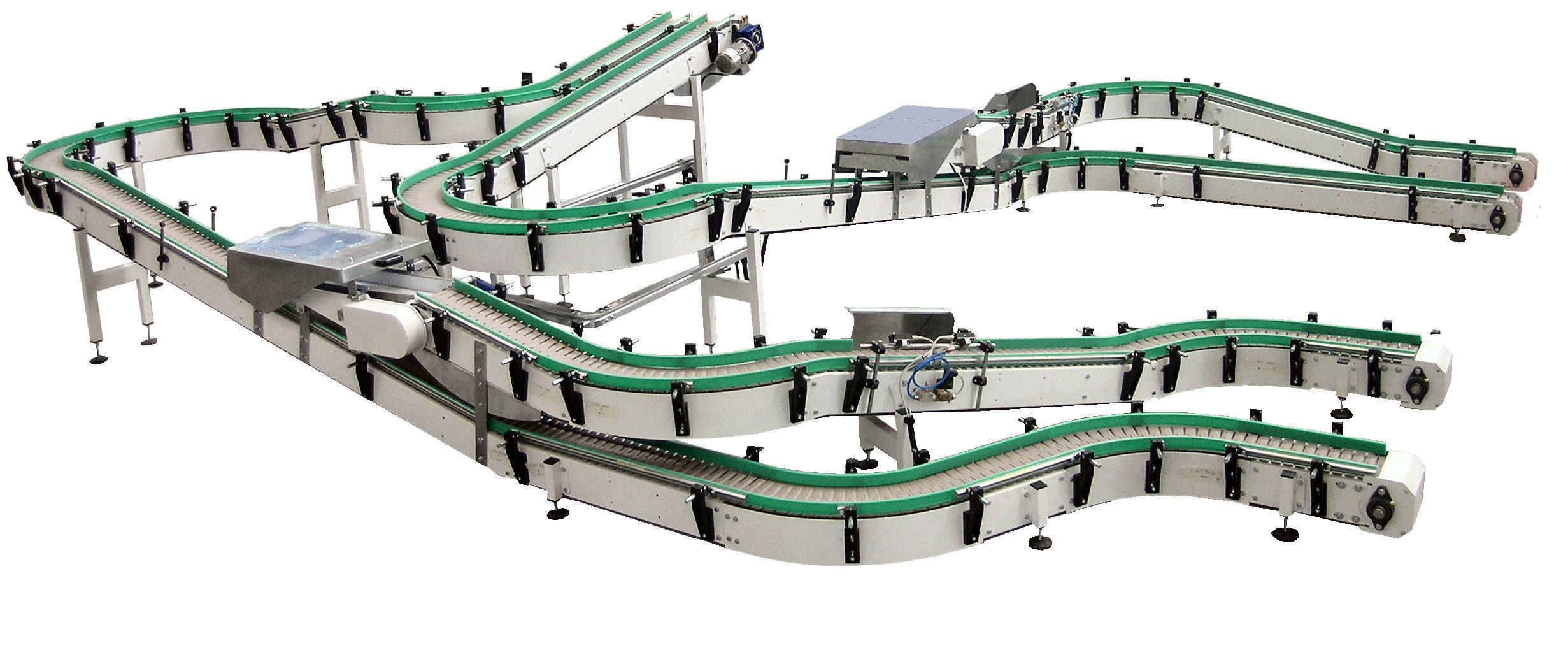
Assembly-line for Feedbag powder bags


Assembly-line for Feedbag powder bags--made by Guangzhou Hongjiang Automation Equipment Co., Ltd.


#feedassemblyline #powderbagsconveyorsystem #powderpackagetransmissionline #bagconveyorsystem


2018年6月13日星期三

News - Guangzhou Hongjiang, as the most popular conveyors manufacturer,attended the 2018,6th Dongguan Robotics & Automation Exhibition

News - Guangzhou Hongjiang, as the most popular conveyors manufacturer,attended the 2018,6th Dongguan Robotics & Automation Exhibition: News - Guangzhou Hongjiang, as the most popular conveyors manufacturer,attended the 2018,6th Dongguan Robotics & Automation Exhibition


we will exhibit new type spiral conveyor and conveyor component

#spiralconveyor #screwconveyor #plasticconveyorcomponent #conveyorparts

2018年6月11日星期一

Question And Answer About The Conveyor Design

Question and Answer About the Conveyor
1: The assembly line must always be from left to right or from right to left?
In general, because most people are accustomed to the right hand, the assembly line flows from left to right. However, because of the limitation of the area of ​​some factories, it may cause at least one of the two or more conveyor lines to flow in the opposite direction.
2:U-shaped assembly line is the most appropriate?
Not necessarily, the production line layout must be based on the product's characteristics and craftsmanship.

3: The faster the assembly line, the higher its production capacity?
The level of production capacity should depend on the operating time of the bottleneck process and the fastest working time of each station. If it is forced to increase the speed of the production line, it will cause many problems.

4: Is the assembly line designed to ship products?
not completely. The ultimate goal is still to achieve the "continual value flow" of the product.

5: Why is the production rate just lower at the time of work or shift?
It is a stage of preparation and it is a period of time when problems occur. So the management of the shift is very critical. 

6: Should the streamline speed settings be kept constant? Every day?
In the same product category should be constant, in the production of different products on the same line, there will be changes in speed. At the same time, because of the problem of new employees, the line speed will decrease.

7: Pitch mark Can only put one product per cell?
Not necessarily, should be the pursuit of stable production flow

8: The faster the pre-assembly process, the better? Is it better to buffer more inventory?
No, it should be produced on demand. However, the pre-assembly processing speed can be slightly faster than the assembly speed.

9: The assembly line is easy to find backlog, computer can show progress, and the line length reminds employees to do it quickly?
The first two are correct, but the third is not necessarily. In the normal production cycle, it is not appropriate to urge employees. This will cause some unnecessary problems (for example, urging employees to change their hands-on changes, and neglecting the inspections). 

10: The line lengther said that someone asked for leave, couldn't line up? If I can't borrow people, can I separate my employees?
First of all, the assembly line cannot strictly complete the follow-up of all assignments. Because there are few people in one area, there will be a decline in production, but not much. Where else does the emergency response occur? Managers do not consider these common problems, then he can open a factory?

11: Is it reasonable for employees to stand in production or sit in production?
Due to product/condition/facilities

12: The container on the streamline should be dedicated or generic. What is his size?
Most general-purpose designs should be designed, and general-purpose special treatment cannot be used.

13: How highly reasonable is the width of the streamline and the height and width of the machine?
According to ergonomic principles, the sitting table is 65~75CM high, the seat is 38~45, the standing table is 85~95CM, the seat is 58~62, and there are 20~30 board feet.

2018年6月6日星期三

How To Optimize The Assembly Line

optimization
The assembly line plays an important role in industrial production. Optimizing theassembly line directly affects the quality of products and the efficiency of production. Therefore, it becomes a topic that companies must pay attention to.
1. Optimize the operation time of the first station of the assembly line, and how long it takes to put a board. This is the required input cycle time to meet the production plan volume. However, in practice, the bottleneck station's working time must be greater than the first station, and the first station must not be a bottleneck station. Therefore, the first station may not be completely invested according to the required cycle time, because the bottleneck station has slowed down its speed. Therefore, from the management point of view, it is necessary to require first-stop operators to invest at the required speed. The conveyor belt speed in the assembly line can also be used to calculate the daily output. Here is the formula for the speed of the conveyor belt:
Pitch time of the conveyor belt = day-time work/day production* (1+ defective rate)
Conveyor speed = distance between markers / pitch of the conveyor
The mark distance, the distance between the marks on the assembly line belt, expects the operator to complete the work and place it on the belt line at the speed at which the marks flow; however, the chain line is not marked and the length of the board is used. Marking distance. Why use a conveyor belt? Besides semi-manufactured items, there are also semi-mandatory operators who can perform tasks as planned. However, they do not try to speed things up. They should be calculated according to the above formula.
2. Observe which station on the assembly line is the bottleneck station:
(1) Stations that are always busy;
(2) Always pull the board back to the station;
(3) From the station, there was an interval between the original one and the next.
The above three points are visually perceptible. The second is the use of a stopwatch. The operating time is the longest of all stations.
The operating time of the bottleneck station becomes the cycle time of the actual output of the entire assembly line, and the daily production formula is as follows:
Daily production = actual work time/interval cycle time
Therefore, as long as the on-site cadres can reduce their working hours, they can significantly increase their output. For example, they can use parts to do other stations, use governance tools to save movement, improve the configuration of the operating domain, and so on. However, after the bottleneck station is solved, new bottleneck stations may appear. Therefore, this new bottleneck station will be improved. Therefore, the bottleneck station will continue to improve, and the efficiency of the entire assembly line will increase day by day.

3. Observe the cycle time at the last station of the assembly line, which is the actual output cycle time. The cycle time of this station must be equal to the bottleneck station. From this station, we can calculate the efficiency of this assembly line. The formula is as follows:
Efficiency = input cycle time/actual cycle time = working time at the first station / working time at the last station
Of course, you can use the bottleneck station's operating time to calculate, but it is always simple and practical to observe the last stop.
The number of WIP on the assembly line is equal to:
(Working time at the last stop - Working hours at the first station) * (Working hours on the whole day/Working hours at the last stop)

4. Observation of the farming rate
Activity rate = time spent on work / working hours throughout the day
The so-called movement is an effective line of work on the assembly line. The fact that the operator sits on the seat does not mean that he is at work and that he has to work on the product. Therefore, observe the operator's time at work. However, in reality, it is impossible to measure every operator for the entire day. Therefore, there is a kind of work spot-checking method to simulate measurement. In fact, from time to time, we see what the operator is doing.

5, the assembly line operator sitting on the seat does not mean that he has to work seriously, so the final is to observe the speed of each operator's job, speed is a very abstract concept, light is difficult to compare and quantify from the visual, so Establishing a standard speed in your heart is faster than it is even better. The movements are streamlined, fixed, and rhythmically performed, often with better working speeds, and vice versa. This is easier to observe.
2018年6月5日星期二

What The Advantge, Feature Of The Assembly Line

The advantages of assembly line or conveyor 
1. Integrate production process, can arrange a variety of workstations on the assembly line to meet production needs;
2. High scalability, can design the assembly line that meets the product production demand according to the factory's demand;
3. Saving factory production costs can save the number of production workers to a certain extent, achieve a certain degree of automated production, with little investment in the early stage and a high return rate.

Assembly line feature
1. The degree of professionalism in the workplace is high.
2. The process is closed, the work place is arranged in the order of the process, and the labor object makes one-way movement between processes
3. The processing time of each process is the same as the proportion of the number of workplaces in each process.
4. Each process is produced according to a uniform beat. The so-called beat refers to the time interval between the production of two adjacent products.

Assembly line system
According to whether the production object moves, it can be divided into fixed flow production line and mobile flow production line.
According to the number of production varieties, it can be divided into single-type production line and multi-type production line.
According to the continuous degree of production, it can be divided into continuous flow production line and intermittent flow production line.
According to the method of realizing rhythm, it can be divided into forced beat water production line and free beat water production line.
According to the degree of mechanization, it can be divided into three types of hand-made, mechanized and automated production lines.

2018年6月4日星期一

what is assembly line

Assembly line is also called assembly line conveyor. An industrial production method means that each production unit only focuses on the processing of a certain fragment to improve work efficiency and output. According to the assembly line, it can be roughly divided into: belt assembly line and Chain plate, double speed chain, plug-in line, mesh belt linesuspension line and roller conveyor line these seven types of lines. It generally consists of traction elements, load bearing members, drive devices, tensioners, redirection devices, and support elements. The pipeline has high expandability and can be designed according to the needs of the delivery volume, conveying speed, assembly station, auxiliary components (including quick connectors, fans, lights, sockets, crafts,console, 24V power supply, wind batch, etc. 
The assembly line is an effective combination of man and machine, which fully reflects the flexibility of the equipment, and it combines the organic combination of the delivery system, accompanying fixtures, on-line special machines, and testing equipment to meet the requirements for the transportation of various product types. With synchronous transmission (forced) or non-synchronous transmission (flexible), according to the choice of configuration, assembly and transport requirements can be achieved.The transport line is indispensable for the mass production of enterprises.
Origin
In 1769, the Englishman Josiah Wedgewood set up the Etruscan ceramics factory and implemented a fine division of labor on the site. He divided the original pottery process completed by one person into dozens of specialized processes. Respectively by the person to complete. In this way, the “potters” in the original sense ceased to exist. What existed was that diggers, mason, earth-workers, and blank makers turned potters into potters’ workers. They must press A fixed work rhythm and labor are subject to unified labor management.
(According to the above information, it can be clearly seen that Wedgwood's working methods can be fully defined as “pipelines.” Another is that Henry Ford invented the assembly line process, which is obviously inaccurate, because Henry Ford Born in 1863 and lived more than ninety years, nearly a century later.