2019年1月9日星期三
Food Grade Belt Conveyor for Corn Transmission
#FoodGradeBeltConveyorforCornTransmission #elevatorconveyor #conveyorsystem #foodfactoryautomationline #straightrunningbeltconveyor

2019年1月8日星期二
What Are The Correct Ways To Operate A Flexible Chain Conveyor?
#flexiblechainconveyor #conveyingequipment #conveyingsystem #flexibleconveyor #transmissionpart
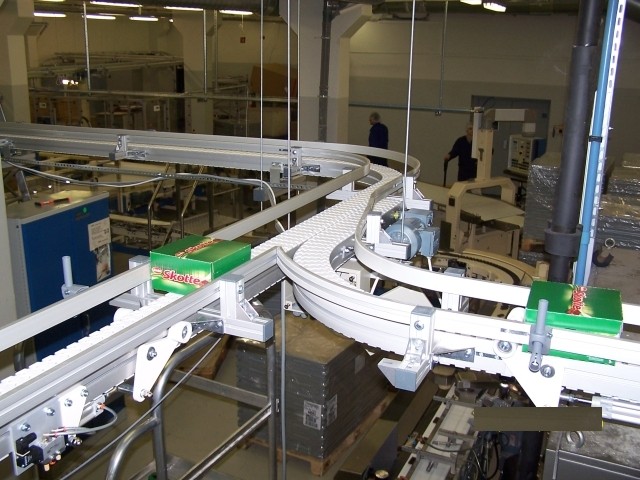
The flexible chain conveyor is a common conveying equipment. It is a new combined three-dimensional conveying system based on the traditional conveyor. It can meet the multi-angle conveying task in the space, whether it is a sharp turn or an uphill It can handle it downhill. Although the flexible conveyor is continuously improved and the operation is more and more simple and convenient, we believes that professional staff is required to operate more properly, with fewer failures.
1. Boot check
Before opening the flexible chain conveyor, it is necessary to check the transmission part and the sprocket. The chain plate and the safety guard are not installed firmly and reliably. Check whether the connection of each line is loose or slippery. Check that the lubrication of the line break between the chain plates does not meet the requirements.
2. Boot according to the boot sequence
(1) First open the receiving equipment
(2) Start the chain conveyor line
(3) Start the feeding device
3. The flexible chain conveyor should be evenly fed during operation.
When transporting materials, it should not be too much, otherwise it will be easy to block and flow to the outside of the machine, which will easily cause the chain plate to derail.
4. During the transportation process of the flexible chain conveyor, any failures need to be immediately stopped for inspection and professional maintenance.
5. Usually check the tightness of the chain plate, adjust the tightness at any time to prevent the chain conveyor belt from slipping
6. Keep the line body clean and clean, and fill in the relevant records carefully every day.
8. Before stopping the machine, stop the feeding equipment first, and then wait for the material on the conveyor belt to be cleaned and then stop.
If you are in the process of using the flexible chain conveyor, you can leave a message to us.
2019年1月7日星期一
The Outer Chain Plate Design Of The Chain
#outerlinkplate #assemblychain #rollerchain #stainlesssteelplasticchain
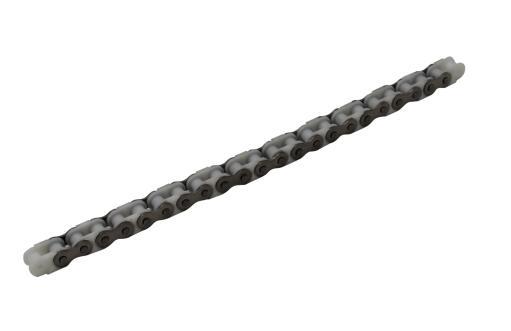
An outer link plate assembled on a chain, forming a waist portion of an inner arc at an upper end and a lower end at the center thereof, and having circular arc-shaped end portions on both sides of the waist portion, respectively providing perforations on each end portion.
The feature is: waist portion. The upper left corner and the lower right corner each form an inclined surface of the everted, and at the waist near the vertical line of the center of the plate is a leg portion that is not everted and maintains the original flatness and thickness of the plate body.
The assembly chain has a good and stable abutting position when shifting, so as to avoid the chain slipping and returning to the original track, and the inclined surface offset makes the plate body easy to slide into the corresponding tooth during shifting, so that the shifting is smooth. Without it, there will be a delay.
Do You Know These Inspection Items And Solutions For The Conveyor Chains?
#flexiblelinkes #stainlesssteelchainplates #plasticchhainplates #conveyorchainplates #automatedassemblylines #glassmachinery #foodmachinery
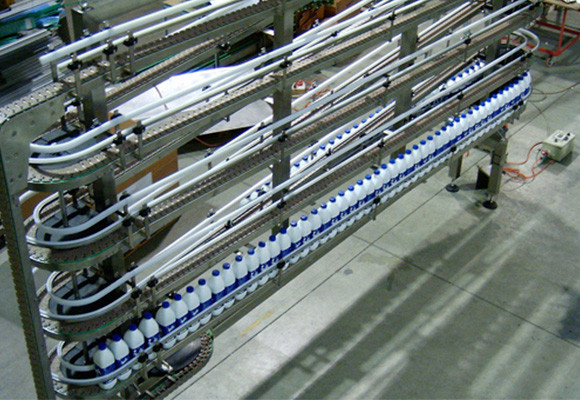
In the conveyor equipment industry, conveyor chain is a very important component, including all walks of life, using chain products, including plastic chain plates, conveyor chain plates, chip chain conveyors, stainless steel chain plates, etc. However, conveyor chain plates are an important component of the various conveyor industries, with the highest transmission power, while chip conveyor chain plates and various milling and processing garbage trucks are mainly used for the application environment requirements, bearing surfaces, chains High strength, heat resistance, tensile strength, flexible links, etc. The conveyor chain plate can be selected according to the difference of the transported objects and the weight of the load, and the size and model of the chain plate.
The conveyor chain plate products have been well developed and applied. It is believed that the user has a corresponding understanding of the product. The plastic chain plate has been mastered as a transmission device, which is mainly used in the transportation industry and has strong corrosion resistance. The ability, stability, and low friction characteristics of stainless steel chains are suitable for corrosion resistance in other operating environments, and are used in high and low temperature applications in certain chemically demanding applications. Moreover, before use, the stainless steel chain can not be directly put into work, but also some inspection work on its products. First, we must check whether the joint has loose deformation, and then see if the chain chain above has deformation, corrosion and cracks. The phenomenon, we need to deal with these problems in a timely manner, we must pay attention to see if there are abnormal sounds in their work, these are all we need to pay special attention, otherwise it may affect us if we are not careful jobs.
The conveyor chain plate is used more in practice. Our staff found in the application that during operation, there will be instability. Through comprehensive experimental analysis, this is mainly due to improper tension. After research, it is found that adding sprocket to it can effectively solve this problem.
The conveyor chain plate needs to pay attention to its stability problem during operation, that is, its tension degree problem. If the temperature difference is too large or the conveyor length is long, the chain plate may be tight or slack. The best way to solve the above situation is to use the method of adding the sprocket in the middle, using the self-generated weight of the sprocket to achieve the purpose of tensioning the chain plate, or using the spring tensioning mechanism at the tail of the conveyor to keep the chain plate at all times. In the tight state, the chain plate on the chain conveyor should be lubricated, otherwise there will be some noise. The best solution is to lubricate the bottom of the chain plate. It has been widely used in many fields such as automated assembly lines, glass machinery, food machinery, medical machinery, and electronic machinery.
2019年1月3日星期四
Correction Of Mesh Belt Conveyor Movement
#conveyingline #thetransferbelt #transfermachine #meshbeltconveyor #thebeltconveyor
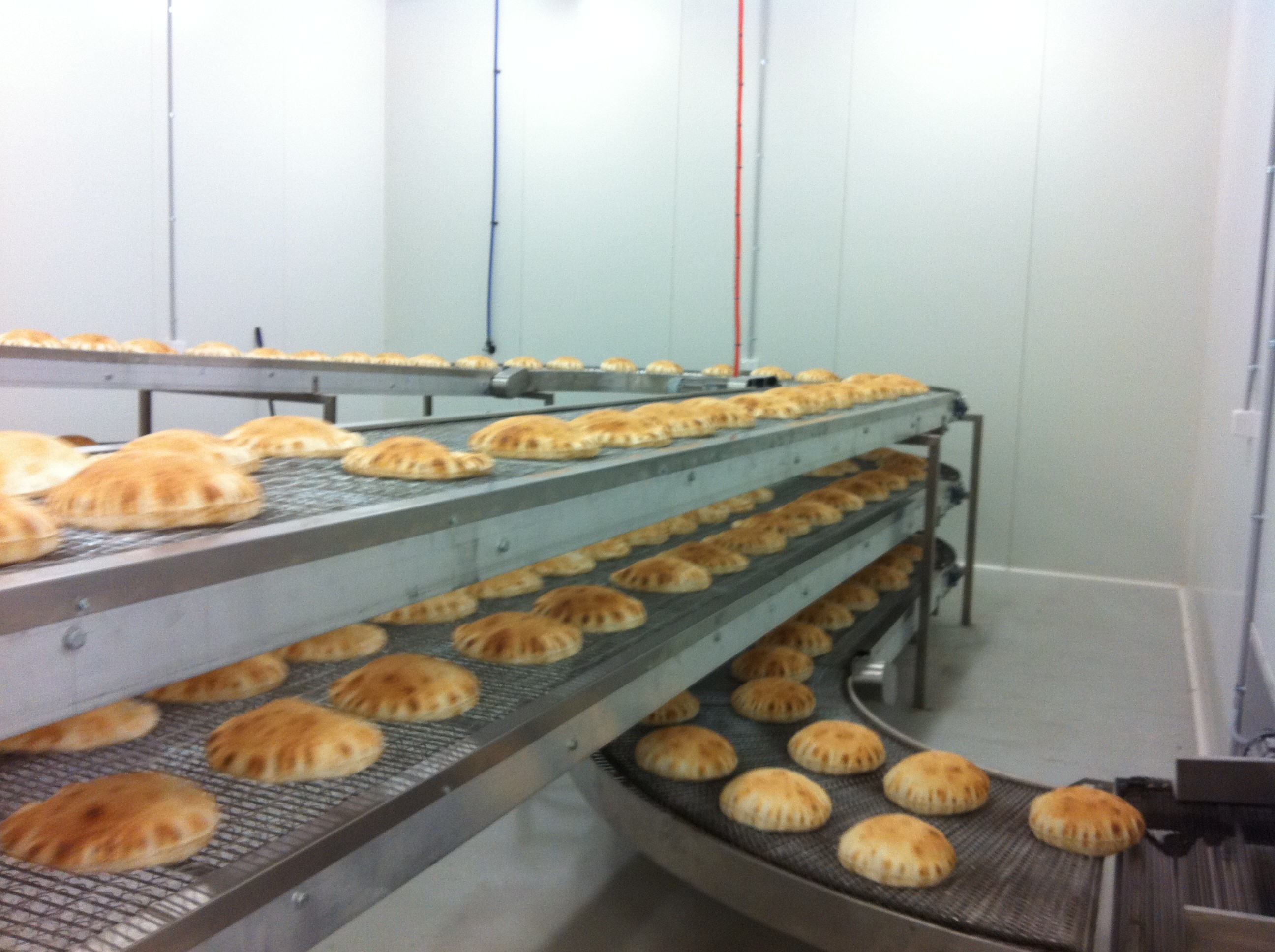
The conveying line body of the mesh belt conveyor can be used to transport various materials in the form of straight lines, curved roads, slopes, etc. according to local conditions. At the same time, the conveying distance is long, the structure is simple and easy to maintain, and the procedure can be carried out very conveniently. Control and automation. The frame device and the tail device of the mesh belt conveyor can also be moved by itself. When the mesh belt conveyor encounters functions such as deviation and straightening, what should we do? When the frame of the mesh belt conveyor is operated by itself, the shifting cylinder starts to contract from the extended state, and the moving head and the moving trolley of the device move forward along the middle track, and each step of moving forward from the sleeve working surface is advanced. It depends on the distance.
With the forward movement of the transfer belt and the moving trolley, when the moving trolley and the transferer head move forward along the middle rail for a cumulative distance of three meters, the shift cylinder is shortened to the shortest; then the shift cylinder is extended, and Taking the mobile trolley and the loader as the fulcrum, the entire tail frame is advanced. When the rack moves forward, the moving cart wheel rotates, and the moving cart and the reloading machine do not move. Move forward up to three meters, each time you advance, you can adjust the rack forward distance according to the use requirements. When the cumulative distance of the self-moving tail frame (relative to the transfer machine) is three kilometers, the frame cannot continue to move forward. At this time, the shifting cylinder is fully extended, and the shifting cylinder completes a transfer machineand a self-moving tail. The alternate push and pull process between the racks.
The mesh belt conveyor does not limit the state of the leveling cylinder and the side shift during the process of shifting the transfer machine (preferably, each cylinder is in a reset state). However, when pushing the tail frame of the machine, the leveling cylinder must be contracted to the shortest state.
When the mesh belt conveyor is conveying materials, when the mesh belt is deflected toward the other side, the corresponding leveling cylinder or the necessary side shifting cylinder may be operated to raise or correct the corresponding side of the rack. Adjust the top wire on the roller until the mesh belt returns to its normal position. After the straightening mesh belt is restored to the normal position. When the machine head of the transfer machine is deflected from the forward direction of the working surface or when the tail of the belt conveyor is deflected from the belt conveyor, the device can be straightened by the device, and the operation procedure is when the machine head and the working surface of the transfer machine are used. When the forward direction is skewed or when the tail of the belt conveyor is deflected from the belt conveyor, it can be straightened by the device. The operation procedure is to operate the flat cylinder to operate the leveling cylinder to raise the frame and leave the slot. Base plate. Operate the side shifting cylinder to move the frame in the required direction. The leveling cylinder and the frame and the cylinder seat are spurred with the ram as the fulcrum, and move along the ram in a predetermined direction. The design of the side shifting cylinder is 170mm, so the rack moves every time. The maximum is 170mm, at which point the ram is biased to one side of the frame. Operate the leveling cylinder to drop the frame onto the bottom plate of the slot and leave the ram away from the bottom plate. Operate the side shifting cylinder to return the ram to the neutral position. Operate the leveling cylinder so that the ram falls on the grooved bottom plate, and raise the frame away from the sump bottom plate, repeating the above-mentioned side-shifting frame operation until the required moving distance is reached. The front and rear ends of the rack can be moved in one direction at the same time, or one end of the rack can be separately moved, and the front and rear ends of the rack can be moved in the opposite direction at the same time.
2019年1月2日星期三
What Is The Scope Of Flexible Chain Conveyor?
#flexiblechain #theconveyorchain #flexiblechainconveyors #thesprocket #thechainplate #thechainoflexiblechainconveyor
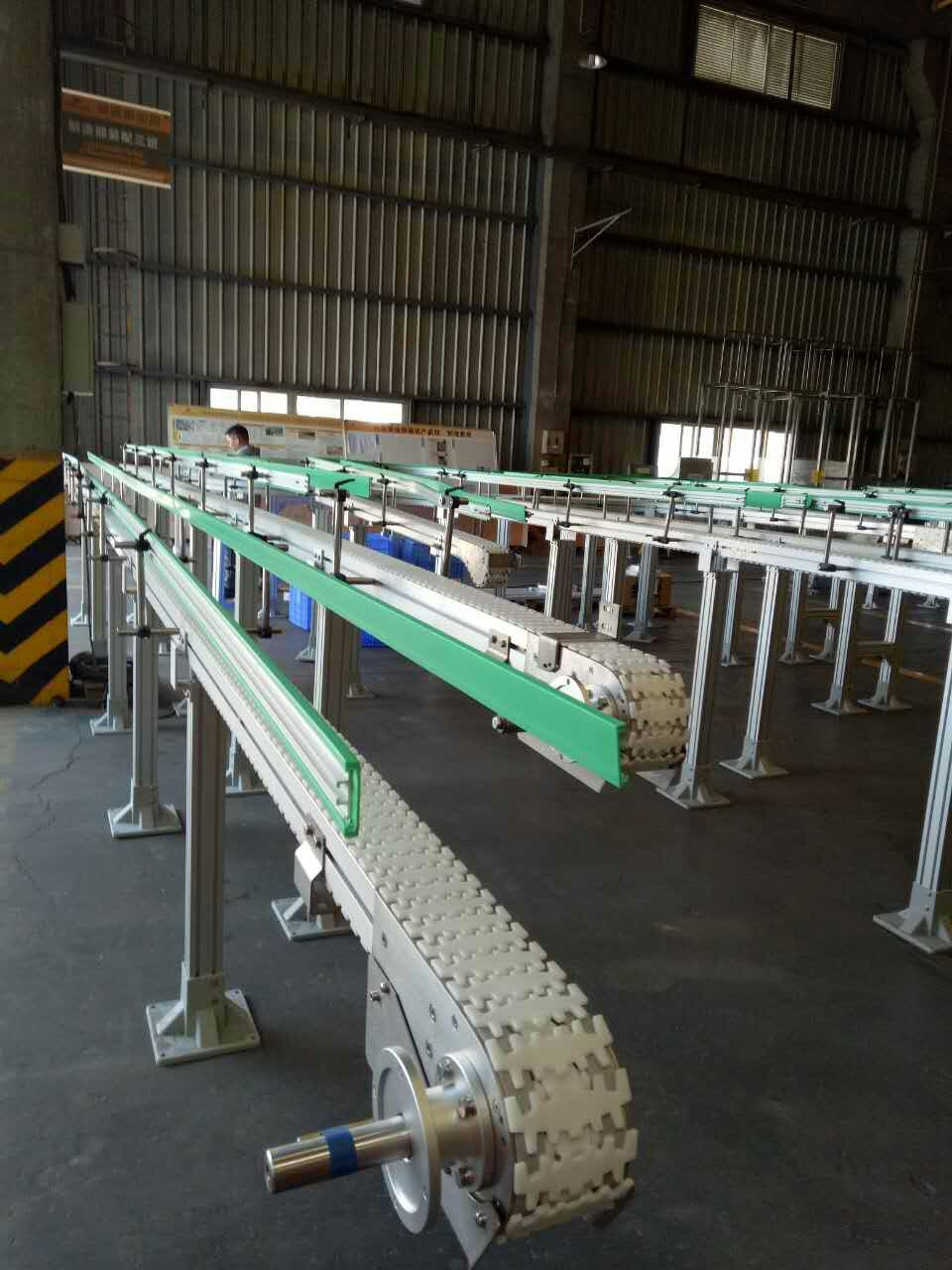
Now people are very concerned about work efficiency, only high efficiency will be liked by people, and equipment is the same. The transportation industry has always been very efficient, and in order to pursue high efficiency, people have invented a lot of equipment, and a flexible chain conveyor is also a kind. However, many people do not know which industries the flexible chain conveyor is suitable for, so that money is wasted. Here is a brief introduction to the applicable range of flexible chain conveyors.
1. The chain plate of the flexible chain conveyor is made of engineering plastics and stainless steel, and the conveyor of the corresponding specification material is selected according to the material requirements of the conveyance.
2. The conveyor chain of the flexible chain conveyor is smooth and flat, and the friction between the transportation materials is small, which can transport the goods smoothly. It is suitable for the transportation of all kinds of cans, bottles and various kinds of carton packaging.
3. The flexible chain conveyor has a relatively large load capacity and strong transportation capacity, and is mostly used in heavy machinery production industries such as engines.
4. The flexible chain conveyor can be easily cleaned and washed with water. The general use of engineering plastics is mostly white, which can meet the medical, food and beverage industries with high hygiene requirements.
The flexible chain conveyor has the advantages of simple structure, easy maintenance, smooth and accurate transportation, and various specifications. It is loved by all walks of life. In industries with quiet requirements and high hygiene requirements such as medicine, food and packaging, the noise of flexible chain conveyors is small. And easy to clean. Today, Xiaobian will analyze with you, how to solve the problem of large noise generated when the flexible chain conveyor is running after installation.
Check if we installed according to the instructions. The chain of the flexible chain conveyor vibrates during operation. It may be caused by no fastening when the chain plate is installed, excessive load or inflexibility between the links. . Only need to adjust the center distance or the tensioning device of the chain plate. The reason for excessive noise during operation of the flexible chain conveyor may be due to insufficient lubricating oil, large wear between the chain plate and the sprocket, and the fact that the chain plate and the sprocket are not coplanar. Operators need to pay more attention to carefully check the maintenance log to find out the corresponding reasons. Check that the chain plate and sprocket are coplanar to adjust the center distance and tensioning device to see if there is a problem with the quality of the lubricant and if the parts are properly lubricated.
The noise of the flexible chain conveyor is very small under normal working conditions. The machine after the standard installation is to be operated for debugging. The daily maintenance and maintenance should be carefully and the corresponding records should be recorded in order to better utilize the flexible chain conveyor. Machine function.
Do You Know The Debugging Of The Ball Chain Conveyor?
#theballchainconveyor #professionalconveyingmachinery #conveyorchain #ballchainconveyors #ballchainplate
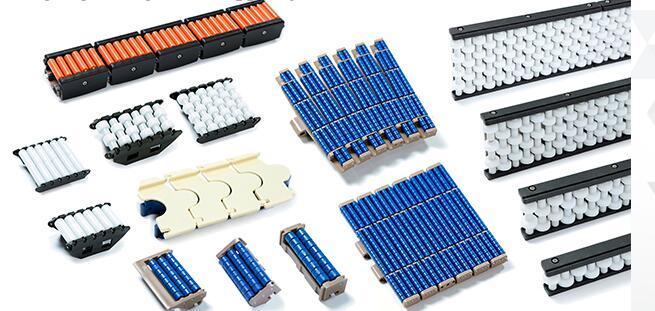
The ball chain conveyor is a professional conveying machinery for the beverage industry. It can be transported in a single row and can be transported side by side. The debugging of the ball chain conveyor should also pay attention to some aspects as follows:
(1) After the ball chain conveyor is installed, it must be operated for 2 hours without load. The no-load operation should meet the following requirements. A. The running direction of the conveyor chain should be consistent with the specified direction. When entering the head wheel, the meshing is correct. When leaving, there should be no card chain or jump chain phenomenon. B. The conveyor chain runs in balance and must not jump. The chain hook and the sides of the casing The gap should be even, the inner chain should avoid the phenomenon of offset, and there is no card or collision. During no-load operation, the main section of the first section, the tail section and each intermediate section shall be provided with a special person to observe the operation of the chain and the driving device. When the problem is found, it shall be stopped in time for the observation, the first section, the tail section and The cover of each intermediate section can be opened, but the cover should be closed immediately after the empty running and tightened with bolts.
(2) After the 2-hour no-load operation of the ball chain conveyor, the load test operation shall be carried out. The load test operation shall meet the following requirements: a. The chain conveyor shall not “reverse the vehicle in the opposite direction, b. check whether the material conforms to the chain conveyor. If the requirements are not met, measures should be taken to solve the problem, otherwise the load operation should not be carried out. c. Start with no load and wait until the operation is normal, then gradually add the material to the height of the material specified in the design. The feeding requirement is uniform and continuous, and the material should not be suddenly added. In order to prevent blockage or overload. d. The feeding port should be equipped with a grid to prevent large materials and miscellaneous pieces from being mixed into the machine slot. e. All kinds of original records should be done in the test, including no load, voltage during load operation. , current, power, line speed and delivery volume of the conveyor chain, etc., and check whether it is consistent with the actual requirements.
After the test run for 8 hours, the trial operation can be stopped. Before the shutdown, the feeding should be stopped first, and the remaining materials in the standby tank can be shut down before being shut down. Generally, it cannot be stopped under full load. If the accident occurs, the machine will be fully loaded and stopped in an emergency. After confirming the troubleshooting, it can be started. When starting, you can take the first move or the right amount of material in the machine slot, and then start up. If the coefficient chain conveyor is connected in series, when starting, the last one should be started in the order according to the flow direction of the material, and then the first one will be started one by one. The order of stopping is opposite to the starting sequence. And overload protection, etc.
Ball chain conveyor operation procedures:
Ball chain conveyors should be designated for operation and maintenance, and others must not be turned on.
Preparation before driving: (1) Check the wires, the beginning and the electrical overload guarantee device, etc., and (2) check whether the fasteners are loose. (3) Check if the lubrication is added to the lubricant as required. (4) Check if the chain is stuck.
The ball chain conveyor should be started at no load, and then input materials after starting.
The material should be stopped after being discharged in the standby, so as to ensure that it can start without load.
The feeding should be uniform, and the materials to be conveyed should not be mixed with the hard objects of the human block to avoid jamming the chain and causing damage to the chain conveyor.
When using, always check the status of each part of the chain conveyor. Note that the fastening parts are ancient loose and fall. If this phenomenon is found, stop it immediately and correct it.
Do not remove any cover during work to avoid accidents and damage to the machine.
Do not transport corrosive materials, hard or high humidity materials.
Ball chain conveyors must not "reverse" in the opposite direction
At the beginning of the use, the chain will grow slightly, and the amount of the conveyor chain falling in the first section should be checked. If it is too large, adjust the tail screw of the tail section or remove one (or several) links. When adjusting, ensure that the tail shaft is perpendicular to the center of the casing to prevent the conveyor chain from “crawling” or discovering When the chain is "crawled", the screw should be adjusted immediately so that the axis of the tail shaft is perpendicular to the center plane of the casing.
If it is continuous for 24 hours, the number of inspection lubrications should be increased appropriately. If it is working at high temperatures, the characteristics of the lubricant should be considered.
The maintenance of the FU series chain conveyor is reasonable and timely, which can ensure the good technical condition of the equipment, ensure its reliability and improve its service life. Each user unit can formulate a practical maintenance system according to the specific conditions of the unit. The maintenance of the Fu type ball chain conveyor should be based on the three-level maintenance system.
Routine maintenance: (1) Keep the conveyor environment of the ball chain conveyor clean, the body and drive should be regularly cleaned to keep it clean. (2) Check if the fasteners are loose or not. (3) Check if the amount of lubricant at each lubrication point is sufficient. (4) Check if the plug and socket are intact and the fuse is damaged.
First-class maintenance: When the FU-type ball chain conveyor is in operation for three months, it is inspected and maintained. The purpose is to check its integrity, prevent excessive wear of the parts and extend the life of the machine.
The contents are as follows: (1) Ball chain plate conveyor cleans the transmission device, adds oil to the transmission chain, replaces the lubricant in the reducer, and (2) the ball chain plate conveyor checks whether the coil core of the electromagnetic switch is flexible up and down, whether there is oil shortage in the oil cup cylinder, oil Whether the viscosity meets the specifications and whether the corners are good. (3) The ball chain conveyor cleans the motor. Secondary maintenance: (1) Disassemble the motor junction box, check the insulation between the phase line and the phase line, and the insulation between the phase line and the iron shell. If the insulation resistance is less than 0.5 megohm, the cause must be detected and repaired. (2) The ball chain plate conveyor disassembles the terminal block for inspection, cleaning and correction. (3) The ball chain conveyor should check the wearing parts. If the wear is too large, it should be replaced. (4) After all the ball chain conveyors have been operated, the test operation is required. The requirements are as described earlier in this manual.
订阅:
博文 (Atom)